The new forecast marks a 0.3 percentage point increase from its previous estimate in October, reflecting optimism that easing inflation and stronger private consumption will help reinvigorate the economy
The World Bank (WB) has revised its growth outlook for Egypt upward, projecting a 3.8% year-on-year expansion for the fiscal year 2024/2025.
The new forecast marks a 0.3 percentage point increase from its previous estimate in October, reflecting optimism that easing inflation and stronger private consumption will help reinvigorate the economy.
In its latest Middle East and North Africa Economic Update, titled Shifting Gears: The Private Sector as an Engine of Growth in the Middle East and North Africa, the WB noted that Egypt’s growth had slowed to 2.4% in FY 2023/2024.
This was slightly below its earlier forecast and attributed the deceleration to weak industrial output, lower Suez Canal revenues, and ongoing restrictions on imports.
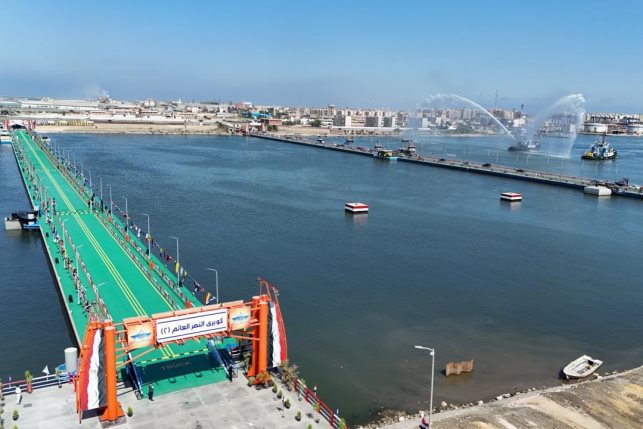
The downturn in Suez Canal revenues remains a key concern, as receipts are expected to fall to $3.7 billion this fiscal year — a sharp $5.1 billion below levels recorded before the onset of the conflict in Gaza.
As of February, vessel traffic through the strategic waterway was still 54% below pre-war averages, reflecting the persistent impact of shipping reroutes.
Despite these headwinds, the World Bank sees Egypt’s growth path stabilizing, maintaining its FY 2025/2026 forecast at 4.2%. While this figure falls just short of the Egyptian government’s 4.5% target, it signals continued economic momentum amid improving macroeconomic conditions.
Reacting to the report, Egypt’s Minister of Planning, Economic Development and International Cooperation, Rania Al Mashat, welcomed the World Bank’s more optimistic outlook. She highlighted it as further validation of Egypt’s ongoing structural reforms aimed at improving the investment climate, empowering the private sector, and building economic resilience.
Al Mashat also referenced the state’s quarterly economic performance reports, underscoring the visible progress made during the second quarter of FY 2024/2025 — a period that has begun to reflect the early fruits of policy adjustments and reform.
On inflation, The World Bank expects Egypt’s average inflation to ease to 20.9% in the current fiscal year, a significant drop from the 33.6% recorded in FY 2023/2024. This improvement is underpinned by exchange rate realignments and tight monetary policy, with inflation forecast to further decline to 15.5% in FY 2025/2026.
However, inflationary pressures persist in the short term. Urban headline inflation ticked up to 13.6% in March, ending a four-month decline, due in part to seasonal food price increases during Ramadan. Still, analysts anticipate a broader trend toward easing, as core inflation continues to decline.
Regionally, the World Bank projects economic growth across the MENA region will accelerate to 2.6% in 2025, up from 1.9% in 2024. GCC countries are expected to see a 3.2% boost, supported by an increase in oil production as OPEC+ begins easing output cuts. Meanwhile, developing oil exporters are forecast to grow at just 0.8%, while oil importers like Egypt are expected to expand by 3.4%.
The report cautions that the region’s recovery is not without risks. Weather shocks, geopolitical instability, and oil market volatility could all derail progress. For Egypt and other oil importers, falling remittances and capital outflows pose additional vulnerabilities.